

Picture this: You’ve just finished a flawless WordPress build for a high-profile client. The site is fast, secure, and ready to launch. Three weeks later, you get that call. The site’s been defaced. Malware everywhere. Your client is furious.
The kicker? It wasn’t even their site that got hacked. It was some random account on the same shared server running a dodgy nulled theme from 2019.
Welcome to the nightmare of shared hosting without proper isolation.
If you’re an MSP or agency managing multiple client sites, this scenario should terrify you. One compromised account shouldn’t be able to take down your entire portfolio. That’s where CloudLinux isolation comes in: and why at Shadowtek, we consider it non-negotiable for agency-grade hosting.
The “Noisy Neighbour” Problem (And Why It’s Your Problem Too)
Traditional shared hosting operates on a simple premise: multiple accounts share the same server resources. Sounds efficient, right? Until you realise what else they’re sharing.
On a standard Linux server without isolation:
- File system access is often poorly restricted
- Process visibility means users can potentially see what others are running
- Resource consumption by one account can cripple everyone else
- A single compromised site can become a launchpad for attacking neighbouring accounts

This is the “noisy neighbour” problem on steroids. It’s not just about some crypto-mining script hogging CPU. It’s about a security breach on Account A giving attackers a direct pathway to Accounts B, C, and D: including your premium clients.
For agencies, this is catastrophic. You’re not just dealing with one angry client. You’re dealing with a potential cascade of breaches, reputation damage, and a very long weekend of incident response.
Enter CloudLinux: The Invisible Shield
CloudLinux is a hardened operating system specifically designed for shared hosting environments. Its core philosophy is simple but powerful: complete isolation between accounts.
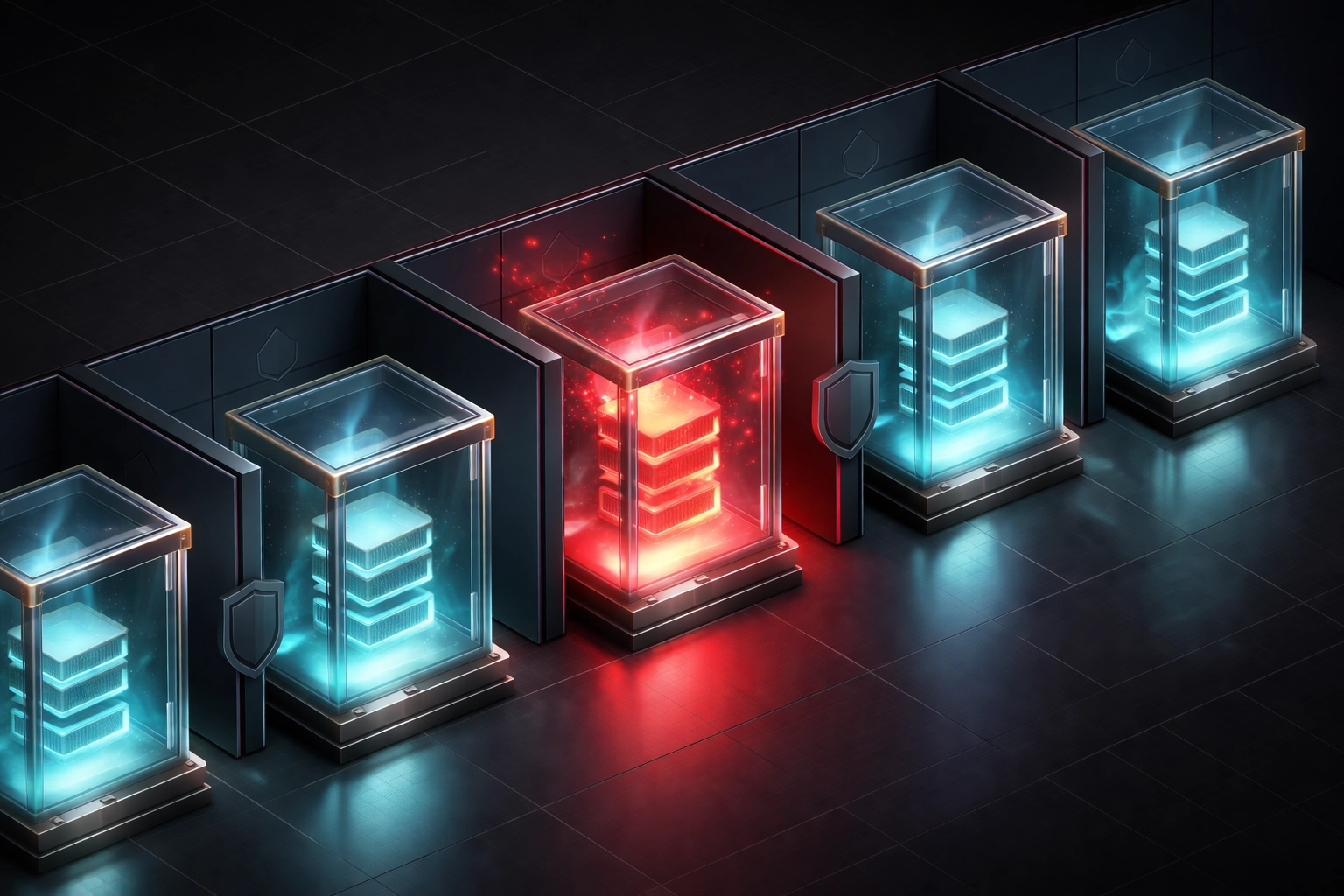
Think of it as putting every hosting account in its own bulletproof glass box. They can see out (access the internet, serve websites), but they can’t see or touch anything happening in the boxes around them.
The magic happens through several integrated technologies working together:
CageFS: Your First Line of Defence
CageFS is the primary isolation mechanism, and it’s genuinely clever. It creates a virtualised file system that essentially “locks” each user into their own private environment: their own cage.
Here’s what CageFS actually prevents:
- User enumeration: Attackers can’t see other users or even detect their presence on the server
- Configuration snooping: No access to Apache configs or other server-level files
- Process visibility: The /proc filesystem is restricted, so users can’t see other users’ processes
- Lateral movement: A compromised account literally cannot read /etc/passwd or determine which other domains are hosted on the same box
This last point is crucial. If an attacker pops a shell on a poorly maintained WordPress site, they typically look for other targets on the same server. With CageFS, they hit a wall. There’s nothing to see, nothing to enumerate, nowhere to go.
LVE: Containing the Blast Radius
While CageFS handles file system isolation, LVE (Lightweight Virtual Environment) tackles resource isolation. Each account gets its own containerised environment with strict limits on:
- CPU usage
- Memory consumption
- I/O operations
- Number of processes
- Entry processes (concurrent connections)
Why does this matter for security? Because many attacks rely on resource exhaustion: whether it’s a brute force attempt, a DDoS amplification, or malware spinning up processes. LVE contains these within the affected account, preventing them from impacting server stability or other hosted sites.
For agencies, this means one client’s compromised contact form getting hammered by bots won’t take down your other clients’ e-commerce sites during their Black Friday sale.
SecureLinks: Blocking the Symlink Trick
Here’s a sneaky attack vector that’s been around forever: symbolic links. An attacker creates a symlink pointing to restricted files or directories, essentially tricking the system into granting access it shouldn’t.
CloudLinux’s SecureLinks feature blocks this entirely. Malicious symlinks simply don’t work. It’s one of those “boring but essential” security features that prevents a surprising number of real-world attacks.
Per-Site Isolation: Defence in Depth
This is where CloudLinux gets really interesting for agencies. Per-Site CageFS Isolation extends the protection model to isolate individual websites within the same user account.
Think about your typical agency setup. You might have a single hosting account containing:
- Client A’s production site
- Client A’s staging site
- Client B’s production site
- An internal project
With per-site isolation enabled, each of these websites operates in its own isolated environment. If the staging site gets compromised during testing, the attacker cannot pivot to the production site: even though they’re technically under the same account.

For development workflows, this is massive. You can treat staging environments as genuinely isolated sandboxes without worrying about a rogue plugin compromising production.
Why This Actually Matters for MSPs and Agencies
Let’s get practical. Here’s what CloudLinux isolation means for your day-to-day operations:
1. Incident Containment
When (not if) a client site gets compromised, the damage stays contained. You’re cleaning up one site, not twenty. Your incident response time drops dramatically because you’re not chasing lateral movement across the server.
2. Client Confidence
You can genuinely tell clients their site is isolated from other accounts. This isn’t marketing fluff: it’s architectural reality. For clients in healthcare, finance, or other regulated industries, this level of isolation can be a compliance requirement.
3. Simplified Cleanup
Without isolation, a malware infection can spread like wildfire. PHP shells get dropped across multiple accounts. Backdoors appear in unexpected places. The cleanup becomes archaeological. With CloudLinux, infected files stay where they are: in one isolated environment.
4. Resource Predictability
No more “mystery slowdowns” because someone else’s cron job went haywire. Each account’s resource allocation is guaranteed, making performance issues far easier to diagnose and resolve.
5. Reduced Attack Surface
Even if an attacker gains access to one account, they can’t use it as a staging ground to probe the server for other vulnerabilities. The attack surface shrinks to just that one isolated environment.
The Bottom Line: Isolation Isn’t Optional Anymore
If you’re running an agency or MSP and you’re still using hosting without proper account isolation, you’re playing Russian roulette with your clients’ sites: and your reputation.
CloudLinux isolation isn’t just a nice-to-have feature. It’s the foundation of any serious agency hosting stack. Combined with other security layers like proactive maintenance plans, Imunify360, and proper backup strategies, it creates an environment where compromises are contained, cleanups are manageable, and your clients can sleep at night.
At Shadowtek, every hosting environment we manage for agency partners runs on CloudLinux with full isolation enabled. It’s not an upsell: it’s the baseline.
Because in 2026, “the other site on your server got hacked” is not an acceptable excuse.
Ready to upgrade your agency’s hosting security? Get in touch with Shadowtek to discuss white-label hosting solutions with enterprise-grade isolation built in. Your clients: and your reputation( will thank you.)